
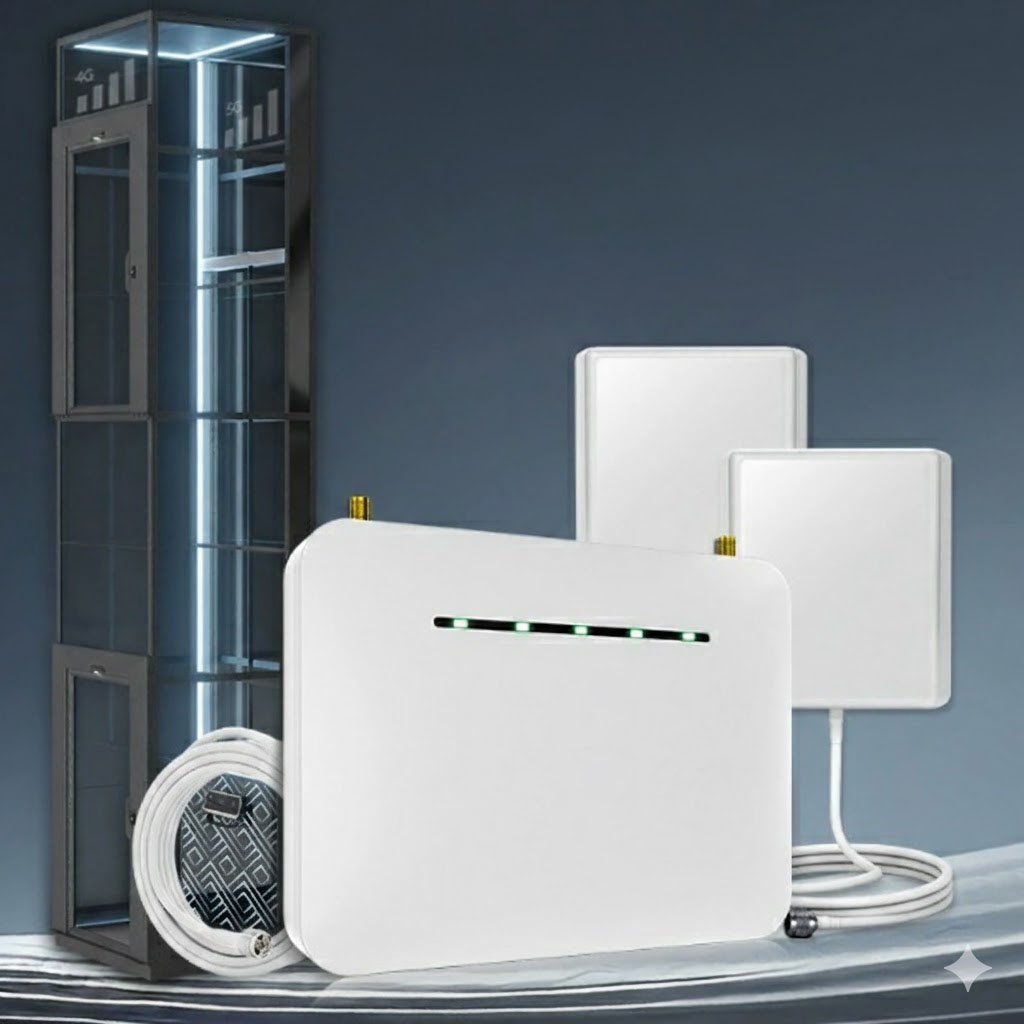
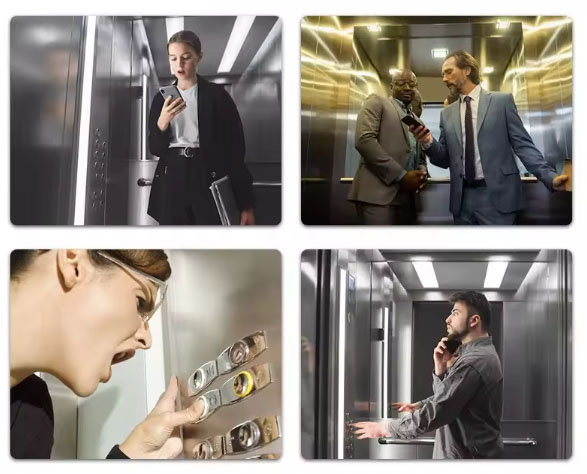
Elevators are notorious for being "dead zones" for mobile connectivity. Whether you are in a high-rise office building or a residential complex, losing a signal the moment the doors close is a common frustration.
This article explores how Elevator Mobile Signal Boosters (also known as Repeaters) solve this problem, the technology behind them, and why they are becoming an essential part of modern building infrastructure.
The Challenge: Why Signals Fail in Elevators
The primary reason for poor reception in elevators is the Faraday Cage effect. Because elevator cabins are typically constructed from thick steel and reinforced concrete, they act as a shield that blocks electromagnetic waves.
Additionally, as the elevator moves through the hoistway, the surrounding structure further absorbs the signal, making it nearly impossible for a standard outdoor cell tower to reach the device inside.
How an Elevator Signal Booster Works
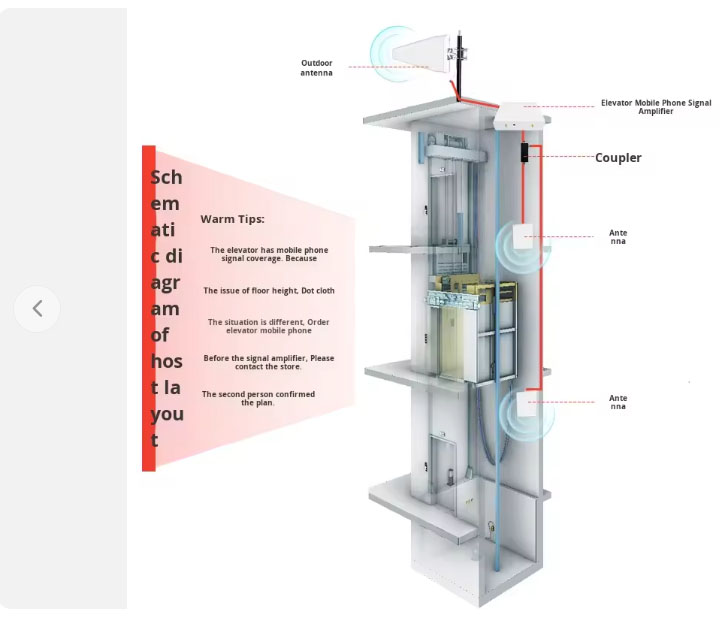
An elevator signal booster system captures a strong signal from the outside and "relays" it into the moving cabin. A standard setup involves three main components:
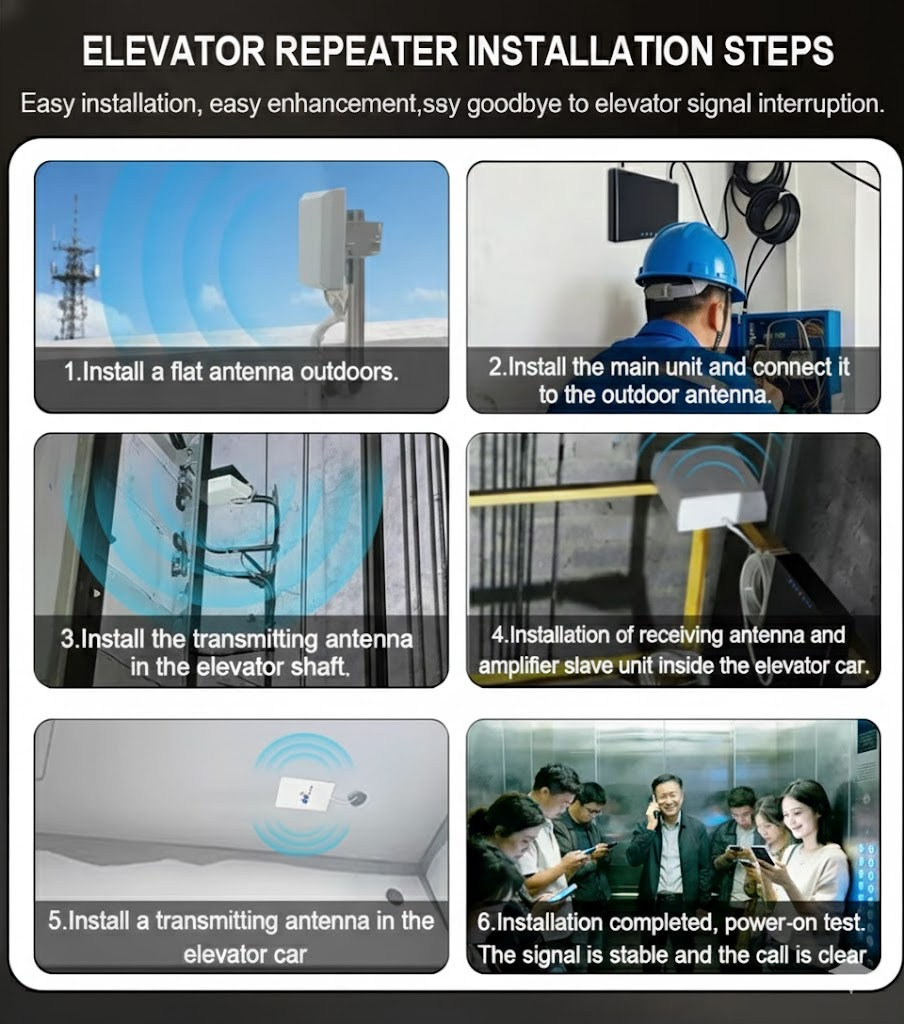
Donor Antenna (Outdoor): Installed on the roof of the building or in a location with a strong line of sight to the nearest cell tower. It captures the existing 4G or 5G signal.
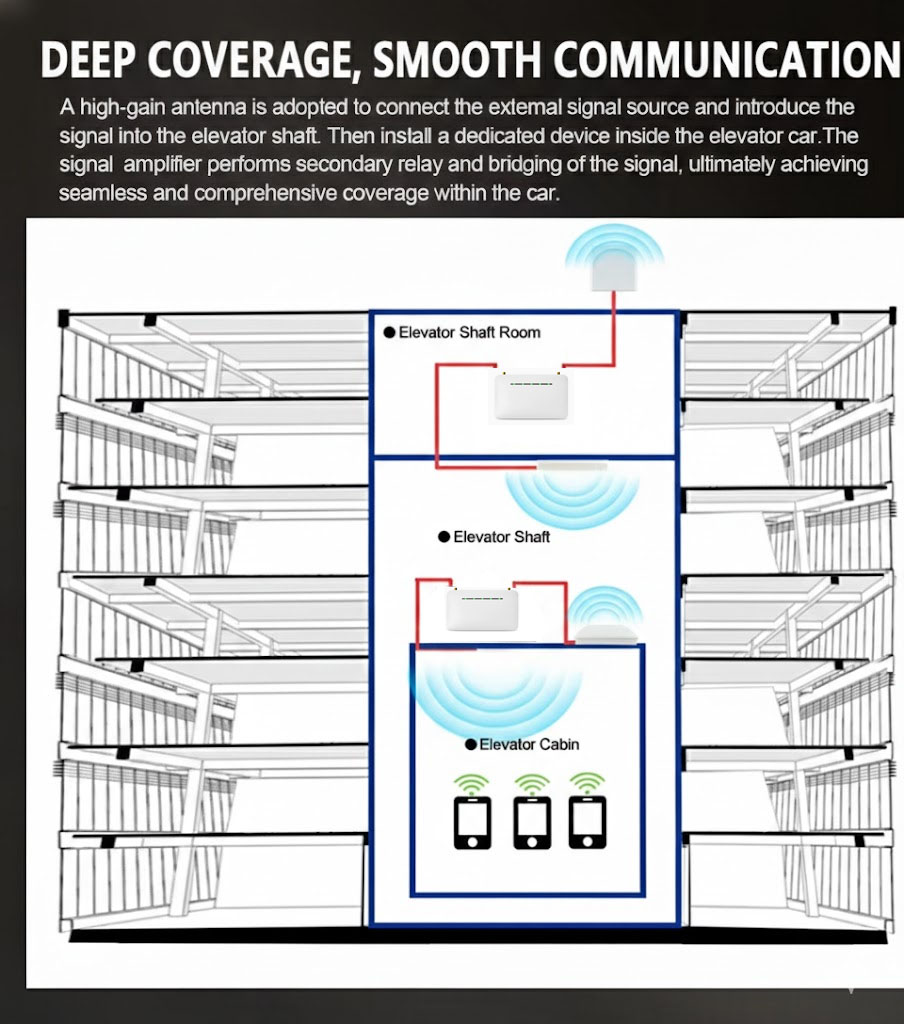
Server Antenna (Indoor/Cabin): This is the most complex part. A specialized antenna is installed either inside the elevator cabin or at the top of the elevator shaft to broadcast the amplified signal directly to users.
Connectivity Methods
There are two primary ways to connect the booster to the moving cabin:
Traveling Cable: A high-quality coaxial cable is integrated into the elevator’s traveling cable bundle. This provides a stable, direct connection but requires specialized installation.
Key Benefits of Installation
1. Enhanced Safety and Emergency Access
While elevators have built-in emergency intercoms, most passengers' first instinct is to use their own phones during a breakdown. Constant signal ensures that trapped passengers can contact emergency services or family, reducing panic.
2. Seamless User Experience
For business environments, dropped calls during a 30-second elevator ride can mean a lost deal or an interrupted meeting. A booster ensures a "seamless handoff," meaning the call doesn't drop when entering or exiting the lift.
3. Battery Preservation
When a phone is in a "dead zone," it increases its power output to search for a signal. By providing a strong signal, the booster helps preserve the battery life of passengers' mobile devices.
Technical Considerations
When selecting a signal booster for an elevator, several technical factors must be considered:
Multi-Band Support: The booster should support all major carriers and multiple frequencies (e.g., 700MHz, 1800MHz, 2100MHz, and 3500MHz for 5G).
ALC (Automatic Level Control): This feature prevents the booster from interfering with the carrier's base station by automatically adjusting the gain.
Regulatory Compliance: In many countries, signal boosters must be approved by telecommunications authorities (like the FCC in the US or CE in Europe) to ensure they do not cause network interference.